
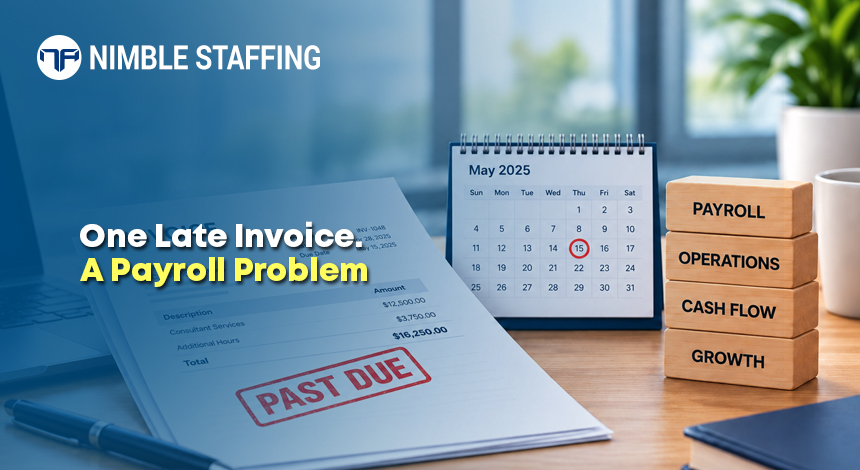
Cash flow is more than the financial metric for staffing firms, It directly impacts payroll, daily operations, and growth.
Employees want to be paid promptly, regardless of when a customer pays their invoice. For staffing firms, this poses a special problem because payroll responsibilities never wait, even if funds arrive later.
A single late-paying customer may quickly put a strain on cash reserves, increase the workload of finance departments, and require leadership to make reactive choices.
The good news? Staffing firms may lessen the effect of late payments and safeguard payroll by implementing the proper accounts receivable procedures, visibility, and controls.
Over time, persistent cash flow pressure can also affect hiring, expansion, technology investments, and other growth decisions.
What Actually Happens When a Client Pays Late?
Late payments seldom affect only the accounts receivable team. First, when salary commitments persist, available cash starts to decrease. Then, leadership may need to focus on collections and cash management. The agency could have to depend more on short-term funds or delay planned investments if the delay persists.
Why Can One Late-Paying Client Affect the Entire Staffing Firm?
It can appear that late payment is a unique client problem. It may have a far wider effect. Staffing firms sometimes manage payroll for numerous customers at the same time. When one major customer is late with payment, the ensuing cash gap might have an impact on the agency’s overall liquidity.
The Risk Increases Considerably More When:
- A significant amount of payroll is represented by the customer.
- The agency’s headcount is growing quickly.
- There aren’t many cash reserves.
- There are several unpaid invoices.
- Short-term financing is currently being utilized.
Focusing on clients may easily turn into focusing on cash flow. Because of this, agencies want insight into both the amount they are invoicing and the anticipated time of payment.
Late Payments Are Usually a Warning Sign
Late payment should not always be treated as an isolated incident. Repeated delays can reveal underlying problems such as:
- Client approval bottlenecks inside the company.
- Disputes over hours and billing rates.
- Changes in the clientele.
- Cash flow issues at the customer.
- Insufficient or faulty documentation.
- Poor payment procedures.
When an agency notices the same account continually paying late, the appropriate reaction is not merely to send another reminder.
How Can Staffing Firms Protect Payroll?
Eliminating all late payments is not the aim. That is not feasible. The objective is to create an accounts receivable and finance system that prevents a single late payment from turning into a payroll emergency.
Here are five doable strategies that staffing companies may use to improve their cash flow security.
- Connect Payroll Planning with Cash Flow Visibility
Staffing firms need clear visibility into committed revenue, issued invoices, outstanding balances, and expected collections.
A well-organized accounts receivable process makes this easier. By keeping billing and receivables organized, agencies can quickly identify what has been invoiced, what is overdue, what is approaching its due date, and which accounts require collection follow-up.
- Constantly Track Client Payment Behaviour
It’s helpful to know when an invoice is past due. Knowing which clients are routinely delayed is considerably more useful.
Agencies ought to keep an eye on:
- Days Sales Outstanding (DSO)
- Aging patterns
- The frequency of late payments
- Disputes over invoices
- Approval hold-ups
- Payment habits of clients
Finance teams may act sooner rather than waiting until a late payment results in a cash deficit when there is greater visibility.
- Manage Payroll Exposure for Each Customer
Although big clients might be great sources of income, there is a chance that they will concentrate risk. As a client’s employment needs increase, agencies should constantly assess their financial exposure.
Think about:
- A steady increase in placements
- Keeping an eye on outstanding receivables as headcount increases
- Examining payment patterns prior to increasing exposure
- Setting criteria for internal exposure
- Increase Billing Accuracy and Speed
Late payment risk often begins before an invoice reaches the client. If billing is delayed, inaccurate, or missing required documentation, the payment cycle may be delayed before it even starts.
Agencies may cut down on needless delays by:
- Billing on time.
- Standardizing procedures for timesheets and approval.
- Recognizing invoice mistakes fast.
- Monitoring outstanding approvals.
- Sustaining precise client records.
An agency’s cash flow becomes more predictable the quicker it can go from hours worked → authorized hours → correct invoice → collection.
5 Build a Cash Flow Contingency Plan
Even the most effective AR procedure cannot ensure that every client will make their payment on schedule. For this reason, a staffing company ought to have a backup plan.
Depending on the company’s financial position and risk tolerance, this may include:
- Maintaining an appropriate cash reserve.
- Establishing access to a secondary source of financing.
- Defining clear escalation procedures for significantly overdue accounts.
- Monitoring payroll and receivables exposure by client.
- Reviewing new placement growth when cash flow is under pressure.
The goal is not to assume that every client will pay late. It is to ensure that one delayed payment does not create an immediate disruption to payroll, operations, or planned growth.
How Does Nimble Staffing help staffing firms manage Accounts Receivable?
Nimble Staffing helps staffing firms centralize accounts receivable activities and gain clearer visibility into outstanding invoices, collections, and client payment patterns.
Instead of relying on scattered spreadsheets and manual follow-ups, finance teams can use a centralized dashboard to understand what is outstanding, identify accounts requiring attention, and make more informed cash flow decisions.
Increased Visibility of Receivables
Teams can better understand the status of outstanding bills and pinpoint accounts that need attention with the aid of an organized AR process.
Accounting Workflows Are More Organized
When accounts receivable information is integrated into the whole accounting process, finance teams may operate more effectively and eliminate needless manual labor.
Improved Cash-Flow Awareness
The faster an organization detects outstanding accounts and payment trends, the sooner leadership can respond.
Improved Decision-Making
Staffing executives may make better decisions about employment, expansion, client exposure, and cash management with improved financial insight.
Conclusion
Left unmanaged, late payments strain a staffing firm’s financial health and put ongoing client relationships at risk. A proper accounts receivable management solution paired with clear legal agreements and a documented Standard Operating Procedure makes late payments far easier to handle. Nimble Staffing provides centralized receivables visibility through an interactive dashboard, helping staffing firms track outstanding invoices, monitor payment activity, and make informed cash flow decisions.
Frequently Asked Questions
1. What Takes Place If a Staffing Client Is Late with Payment?
A late customer payment might swiftly deplete available cash while payroll requirements persist. If the delay continues, staffing businesses may have to boost collection efforts, rely more on short-term financing, postpone expenditures, and make difficult growth decisions.
2. How Can Staffing Companies Guard Payroll Against Late Client Payments?
Staffing firms can mitigate the impact of late payments by maintaining an organized accounts receivable process, monitoring client payment behaviour, improving billing accuracy and speed, managing customer-level payroll exposure, and having a cash flow contingency plan with sufficient reserves or financing options.
3. In What Ways May Nimble Staffing Assist Staffing Firms in Handling Accounts Receivable?
Nimble Staffing streamlines accounts receivable procedures by increasing visibility into overdue bills, minimizing manual follow-ups and isolated spreadsheets, and integrating AR data into the whole accounting process. This helps leadership make better decisions on payroll, growth, and client exposure and increases cash-flow awareness for staffing firms.

Pingback: AR Automation for Staffing Firms | Nimble staffing